
Last updated November 17, 2026
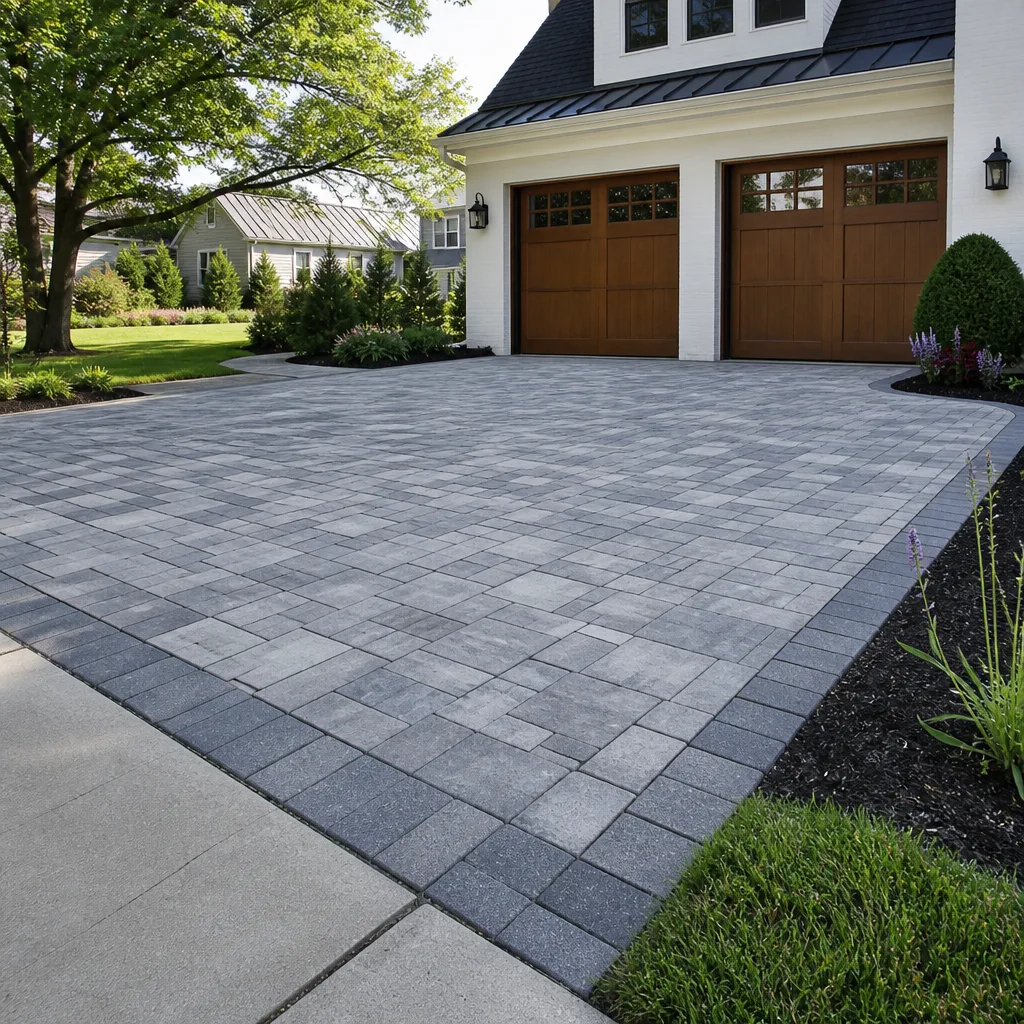 Driveway & pavers
 Kitchen remodeling
 Bathroom remodeling
 Home additions & ADU
 Roofing
 Windows & doors
 Fence
Free written scope consultation - allowances, timeline, and change-order rules on paper before a single trade is scheduled
Driveway & Pavers Maintenance Checklist for Frisco Homeowners
Most Frisco homeowners treat driveway maintenance as something you do when a problem shows up. That’s backwards. A paver driveway installed correctly can still develop visible settlement within a few years here, and the installer usually isn’t the reason. The reason is the calendar. Frisco sits on expansive clay soil that swells with summer rain and shrinks through long dry stretches, and that cycle works on your driveway every single month whether you’re watching or not. What you do in October, before the first hard freeze, matters more than anything you do in April. This guide lays out the full annual sequence for both paver and concrete driveways in Frisco, tells you which tasks you can handle yourself, and flags the ones where calling a professional early saves real money.
Quick Answer
Maintaining a driveway in Frisco comes down to a fixed yearly rhythm: re-sand and seal paver joints in late October before the first hard freeze, check edge restraints and drainage grading every spring, clean and inspect concrete control joints annually, and address cracks before water gets underneath. Because of Frisco’s shrink-swell clay and triple-digit summers, doing these tasks in the right order matters as much as doing them at all. Skipping a season is how a flat, tight driveway turns into a shifting one.
Styles & brands we work with
- Kitchen remodeling
- Bathroom remodeling
- Home additions & ADU
- Roofing
- Windows & doors
- Driveway & pavers
- Fence
Table of Contents
- Why Frisco’s Clay Soil Sets the Maintenance Calendar
- The Late October Window: Joint Sand and Sealer
- Edge Restraint Failure: The Most Common Cause of Paver Spread
- Concrete Driveway Checklist: Cracks, Joints, Seal vs. Resurface
- The Spring Drainage Check That Protects Your Garage
- Summer Heat and Paver Care in Frisco
- The Full Annual Maintenance Calendar
- Cleaning Products and Methods That Won’t Damage Pavers
Why Frisco’s Clay Soil Sets the Maintenance Calendar
Frisco soils are heavy on expansive clay, the kind that takes on water slowly and holds it, then releases it slowly and shrinks. That movement happens under every driveway in town, paver or concrete. What makes it manageable is understanding that the movement is seasonal and predictable, not random. A driveway that’s well maintained is one where the base stayed consistent and the surface stayed sealed to that base.
Paver driveways handle this better than concrete in most cases because the individual units can flex slightly with the base. That flexibility is the strength of the system. It’s also why the joint sand matters so much. The sand is what locks the pavers together into a single surface. When sand washes out from rain or gets blown clear over a dry summer, the pavers start working independently, and once they’re independent, the clay underneath moves them unevenly.
Concrete behaves differently. It’s rigid, so it resists the soil movement until it can’t, and then it cracks along the weakest line, which is usually a control joint. That’s not a failure. It’s the joint doing its job. The problem starts when water gets into that crack and the clay beneath it softens and shifts. So the maintenance logic for concrete is different from pavers: keep water out of the joints and off the subgrade.
Frisco’s neighborhoods sit on varying depths of this clay, and that’s one reason two driveways on the same street can behave differently. It’s also why we don’t recommend a single fixed schedule for every home. We recommend a fixed schedule as a starting point, adjusted to what your specific driveway is doing. If you’re planning a new installation or a full replacement, our driveway & pavers work covers base prep, grading, and material selection with brands like Belgard, Unilock, and Techo-Bloc.
What “settlement” actually looks like
Homeowners often describe a driveway as “sinking” when the pavers are still at the same elevation and the joint sand has simply disappeared. Real settlement means a paver or a group of pavers has dropped relative to its neighbors. You can check by laying a straightedge across the surface in several directions. A small dip under a quarter inch is normal. A drop of an inch or more over a short distance is a signal that the base has moved and needs attention before it gets worse.
The Late October Window: Joint Sand and Sealer
The single most important date on your driveway calendar in Frisco is late October, right before the first hard freeze. That’s when you refresh the joint sand and apply sealer if your pavers need it. The reason is temperature. Sealer needs to cure at moderate temperatures, and applying it in the heat of a Frisco summer risks a sticky, uneven finish. Applying it too late, after a hard freeze has already moved the base, means you’re sealing a surface that’s already out of alignment.
Here’s the sequence we recommend for the fall refresh:
- Clean first. Sweep, then pressure wash at moderate pressure. Let the surface dry completely, usually a full day in Frisco’s fall air.
- Check for loose or rocking pavers. If any unit moves underfoot, the sand and base beneath it are compromised and the paver needs resetting before you sand.
- Re-sand the joints. Use a fine polymeric or kiln-dried sand, worked into the joints with a broom, then compacted. Joints should be full, not just topped off.
- Inspect the edges. Confirm the edge restraint is intact before you seal. Sealing over a failing edge just locks the problem in place.
- Apply sealer if needed. Not every paver needs sealing every year, and some paver lines are sold pre-sealed. Matched sealer to your specific paver brand matters here, which is why choosing your material with a known brand list makes later maintenance easier. We work with Belgard, Unilock, Techo-Bloc, Cambridge Pavers, and Tremron on Frisco installs.
- Keep traffic off. Follow the cure time on the product. In cooler fall weather, that usually means a full day.
If you’re doing this yourself, the sequence above works. The part most homeowners skip is step two, and it’s the most important step. Sanding and sealing over a base problem is the most common way a homeowner ends up paying for a bigger fix later.
Edge Restraint Failure: The Most Common Cause of Paver Spread
If you look at paver driveways that have started to spread at the edges, the culprit is almost always the edge restraint, not the pavers. Edge restraint is the aluminum, steel, or concrete curb that runs along the perimeter and holds the field of pavers tight. When it fails, the outermost row has nothing holding it back, and it creeps outward a little at a time, especially when a car rolls over the edge.
Here’s what to look for:
- Separation along the edge. A visible gap between the outermost paver row and the curb or the lawn.
- Widened joints. Joints near the edge noticeably wider than joints in the center of the driveway.
- Lifted or angled edge pavers. A paver near the curb that sits higher or at a slight tilt relative to its neighbor.
- Soft or rutted soil behind the curb. Water running along the edge can undermine the support behind the curb, which is especially common in Frisco after heavy summer storms.
- Movement when you press. If an edge paver rocks when you press on it, the restraint has likely lost its grip.
Edge restraint repairs are one of the most cost-effective maintenance tasks on a paver driveway, because catching them early is cheap and catching them late is not. Once the field of pavers starts to spread, resetting the edge means lifting a wider section, re-leveling the base, and re-installing. That’s a much bigger job than re-pinning or re-anchoring a curb. If you see the first two signs above on your driveway, it’s worth getting an estimate before the spring rains start.
Concrete Driveway Checklist: Cracks, Joints, Seal vs. Resurface
If your Frisco home has a concrete driveway, the maintenance logic is different from pavers, and the tasks are equally specific. Concrete doesn’t flex, so your job is to keep water from getting into the cracks and joints where it can undermine the subgrade. Here’s the annual checklist:
- Route and fill cracks. Cracks in concrete should be cleaned out and filled with a flexible concrete-rated sealant. Small hairline cracks can usually be filled with caulk-style sealant; wider cracks may need a two-part product. The goal is to keep water out, not to make the crack invisible.
- Clear the control joints. Control joints are the deliberate lines cut into the concrete to control where it cracks. Over time, debris and weeds fill them. Clear them annually and refill with joint sealant if they’ve opened up.
- Check the surface for spalling. Spalling is flaking or pitting at the surface, and it usually points to a moisture problem or a past freeze event. Small patches can be repaired; larger areas may need resurfacing.
- Decide on seal vs. resurface. Sealing is a preventive coat on sound concrete. Resurfacing is a repair for concrete that has spalled, cracked extensively, or settled. If more than a quarter of your driveway’s surface is affected, resurfacing or replacement is usually the better call.
- Inspect the slab-to-garage transition. The joint between the driveway and the garage floor is a common entry point for water. If it’s open or cracked, seal it.
- Check drainage slope away from the garage. Concrete should slope away from the structure. If water pools against the garage door after a Frisco rain, the problem is the slope, not the door.
When seal, when resurface
Sealer is a preventive layer. If your concrete is sound, sealed every two to three years, and free of significant spalling, that’s the right maintenance path. Resurfacing makes sense when the surface has worn but the slab is still stable. If the slab itself has settled or cracked through, neither sealing nor resurfacing fixes it; that’s when replacement is the honest answer. A written estimate that walks through the actual condition of your slab is how you make that decision with confidence rather than a guess.
The Spring Drainage Check That Protects Your Garage
Every spring, after Frisco’s heavier rains, water pooling anywhere near your garage is a driveway problem before it’s a landscaping problem. It sounds counterintuitive, but a driveway that slopes toward the garage is one of the most common driveway faults we see. It’s also one that gets worse quietly, because the first sign is often a stain on the garage floor rather than a puddle on the driveway.
The spring check takes about 15 minutes and covers three things:
- Slope direction. Stand at the garage door and look along the driveway. The surface should fall away from the house, not back toward it. On paver driveways, a low spot near the garage is often a sign that the base has settled.
- Pooling after rain. Look for any low spot where water sits for more than a few hours after a storm. Long-standing puddles are where pavers start to stain and where joints lose sand.
- Runoff direction. Trace where water actually goes during a rain. It should move toward the street or a drainage feature, not along the foundation or under a fence line. If your fence line is where the water ends up, that’s worth a conversation about both the driveway grading and the fence install, and it’s a good reason to treat exterior work as one coordinated effort rather than separate trade calls.
If you find a real grading problem, the fix isn’t cosmetic. It usually means lifting a section of pavers or grinding down concrete to re-establish the slope. Doing that in spring, before summer storms, keeps a small correction small. Wait a couple of seasons and you’re often looking at base work rather than surface work.
Summer Heat and Paver Care in Frisco
Frisco summers push pavers and concrete in the opposite direction from winter. Long stretches above 100 degrees dry out the joint sand and stress the subgrade as the clay shrinks. This is not the season for big sealing projects, but it is the season for attention.
What summer maintenance looks like:
- Water lightly during dry stretches. A light misting on a hot afternoon slows the drying of the joint sand and the clay beneath. This is not a cure for a base problem, but it slows the sand loss that leads to loose pavers.
- Watch for new loose pavers. A paver that was tight in spring and is loose by August is telling you the sand beneath it has moved. Mark those pavers with a small piece of tape and address them at the fall refresh.
- Sweep off debris and sand accumulation. Wind and storms push dirt and sand onto the surface, and that dirt catches in joints and accelerates wear. A quick sweep after each storm helps.
- Keep cars off fresh sealant. If you sealed in late fall, avoid parking heavy vehicles on the same spots in the same way all summer. Shifting tire positions spreads the wear.
Summer is also when you notice the visual wear. Pavers that look faded in August are usually showing the effect of UV on an unsealed surface, not wear on the paver itself. A sealer refresh in the fall brings the color back without replacing a single unit.
The Full Annual Maintenance Calendar
Here’s the rhythm we recommend for Frisco driveways. Treat this as the default and adjust based on what your walkthroughs find.
- February or early March. Post-winter inspection. Check for any paver movement, edge restraint separation, concrete cracking, or new low spots. Winter is mild here, but a wet winter still moves clay.
- March and April. Spring drainage check. Confirm slope away from the garage and trace runoff. Clean concrete control joints and fill any new cracks.
- May through August. Summer watch. Sweep after storms, mark loose pavers, water lightly during long dry stretches, and clear any weeds growing in joints.
- September. Pre-fall inspection. Confirm edge restraint is intact, check joint sand depth, and address any loose pavers before the weather turns.
- Late October. The fall refresh. Clean, re-sand the joints, apply sealer if needed, and confirm the edge restraint is pinned and tight.
- November through January. Low-effort season. Keep the surface clear of leaves and debris, and avoid sealing in cold weather.
If you’re building a new driveway or replacing an existing one, the maintenance plan starts at installation, not after. That means choosing pavers from brands with known long-term performance, installing them over a base designed for Frisco’s clay, and grading correctly from day one. That’s why material selection and base prep are handled in the same conversation as the design. Several of the brand options we work with, including Belgard, Unilock, and Techo-Bloc, publish maintenance guidance that matches what we recommend here, and sticking to one brand family across the driveway and any adjoining walks keeps the finish consistent.
If you’re doing a full exterior upgrade
Driveway work often happens alongside other exterior projects. If you’re also replacing windows and doors, that work should happen before the driveway is finished, so any construction traffic stays off the fresh surface. We handle window and door replacement alongside fence installation and the rest of the exterior as one coordinated project, which is a lot easier than scheduling trades in the right order yourself. If you’re planning a larger property upgrade that includes a home additions & ADU, the driveway grading and drainage plan should be part of that early design work, not an afterthought.
Cleaning Products and Methods That Won’t Damage Pavers
Cleaning is where homeowners do the most accidental damage, usually with pressure washers turned up too high. A paver’s surface is durable, but the joint sand is not. High-pressure washing blasts the sand out of the joints, and once that happens, the whole system loosens.
- Pressure wash at moderate pressure. Use a fan tip and keep the nozzle moving. If you’re seeing joint sand fly out, back off.
- Use a pH-neutral cleaner. General paver cleaners or a mild dish soap solution work for most stains. Avoid harsh acids on concrete or pavers unless you know the product is rated for the surface.
- Treat rust and oil promptly. Rust stains and oil spots get harder to lift the longer they sit. A dedicated paver cleaner for the specific stain type works better than a general-purpose product.
- Re-sand after any deep clean. Any cleaning that removes sand should be followed by a joint sand refresh, which is why the fall refresh and the deep clean should happen in the same window.
- Don’t seal a dirty surface. Sealer traps dirt. Clean first, dry fully, then seal.
The window and door angle matters here too. If you’re replacing a sliding glass door or window near the driveway, sealing around the frame with a product rated for exterior exposure makes sense, and brands like Therma-Tru and ViewLux are ones we work with regularly for exterior door and window replacements. A leaky door frame near the driveway is a source of water that undermines grading over time.
Common Mistakes to Avoid
- Sealing over a base problem. If a paver is rocking, sealing it locks in the flaw and hides the symptom. Fix the base first, then seal.
- Skipping the fall window. In Frisco, late October is the target for joint sand and sealer. Doing it in summer risks a sticky finish; doing it after a freeze risks sealing a surface that’s already moved.
- Pressure washing too aggressively. High pressure blasts joint sand out and undoes the work you just paid for. Moderate pressure and a fan tip are the way to clean.
- Ignoring edge restraint. A paver drive that’s spreading at the edges almost always has a failing curb. The first time you notice a gap, get it looked at before you’re resetting a wider section.
- Letting water pool against the garage. A low spot near the garage door is a grading problem that gets worse every season. Address it in spring, not after the first stain inside the garage.
- Using the wrong sealer for the paver brand. Each paver line behaves differently with different sealers. Confirming the right sealer for your specific brand avoids a cloudy or sticky result.
- Treating concrete and paver driveways the same. Concrete needs joint clearing and crack routing; pavers need joint sand and edge checks. The two schedules overlap but the tasks don’t.
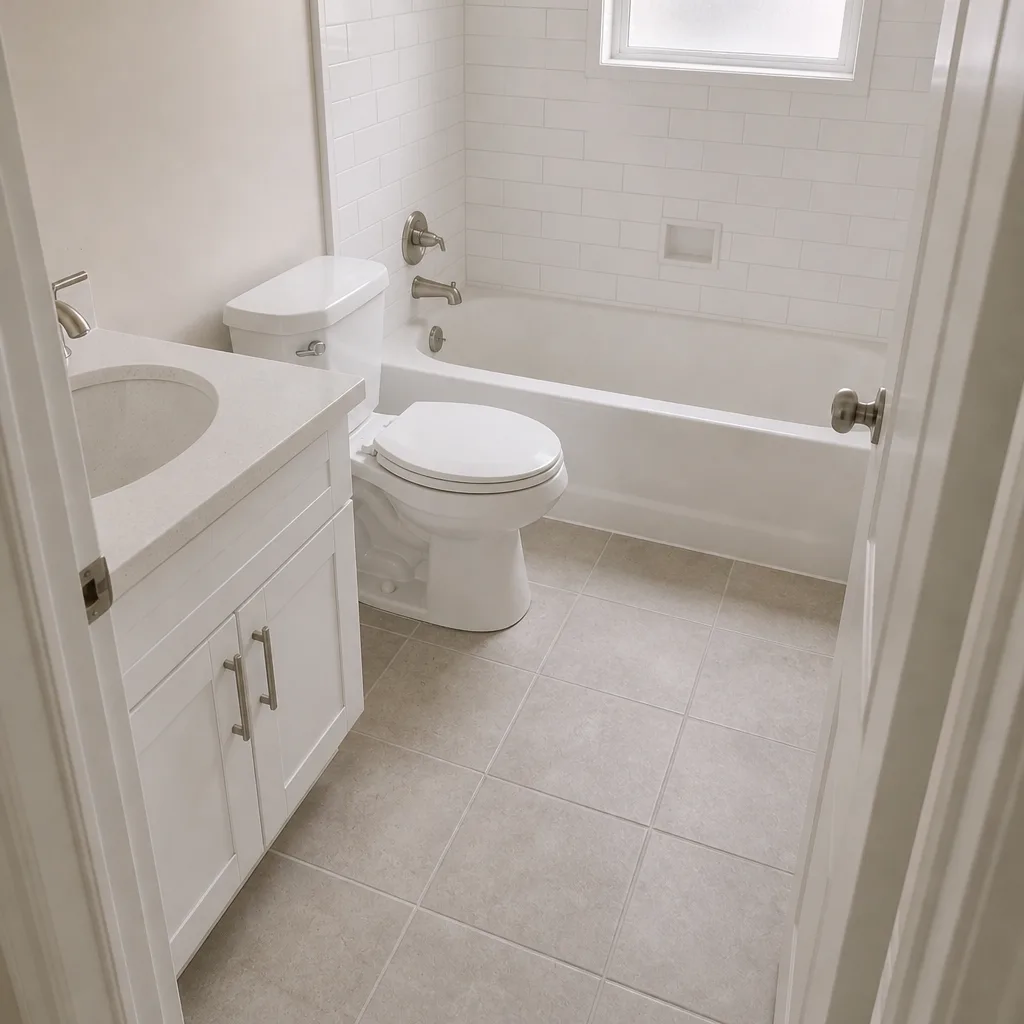
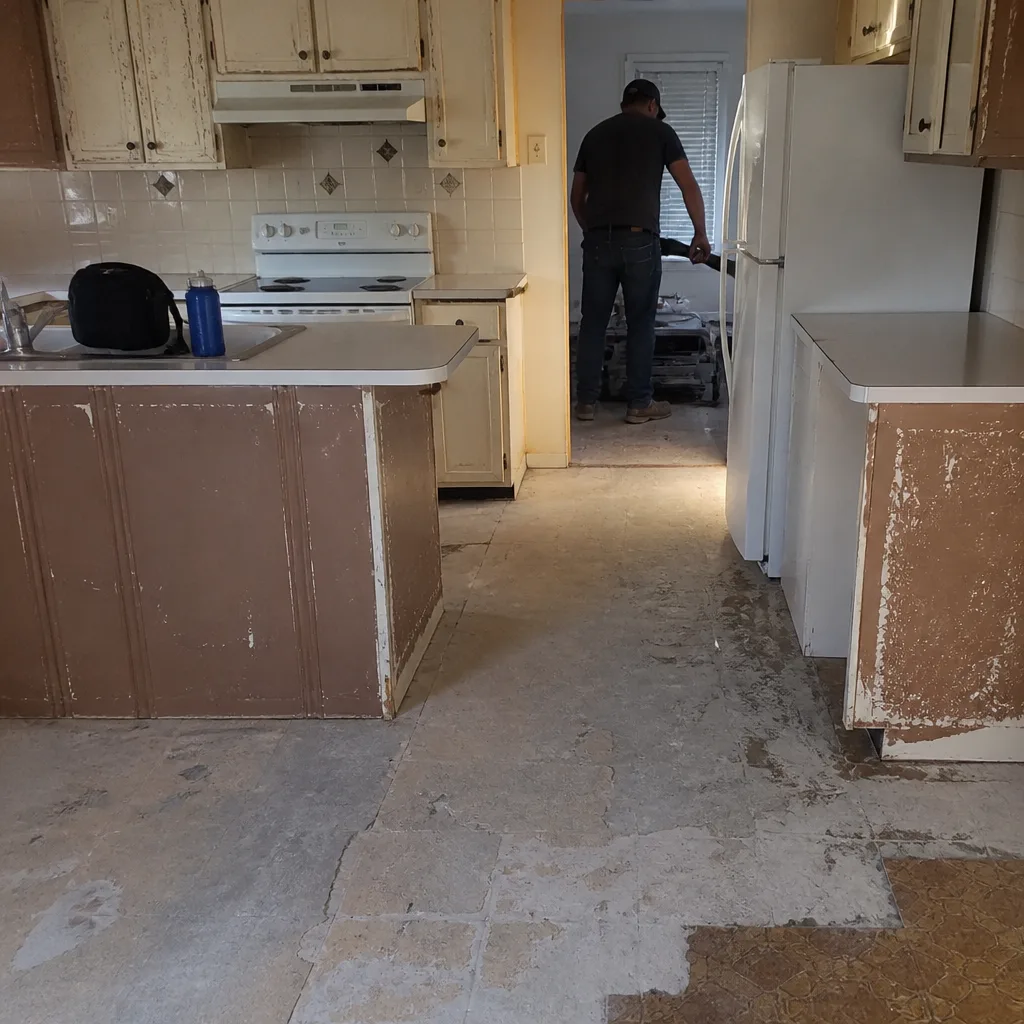
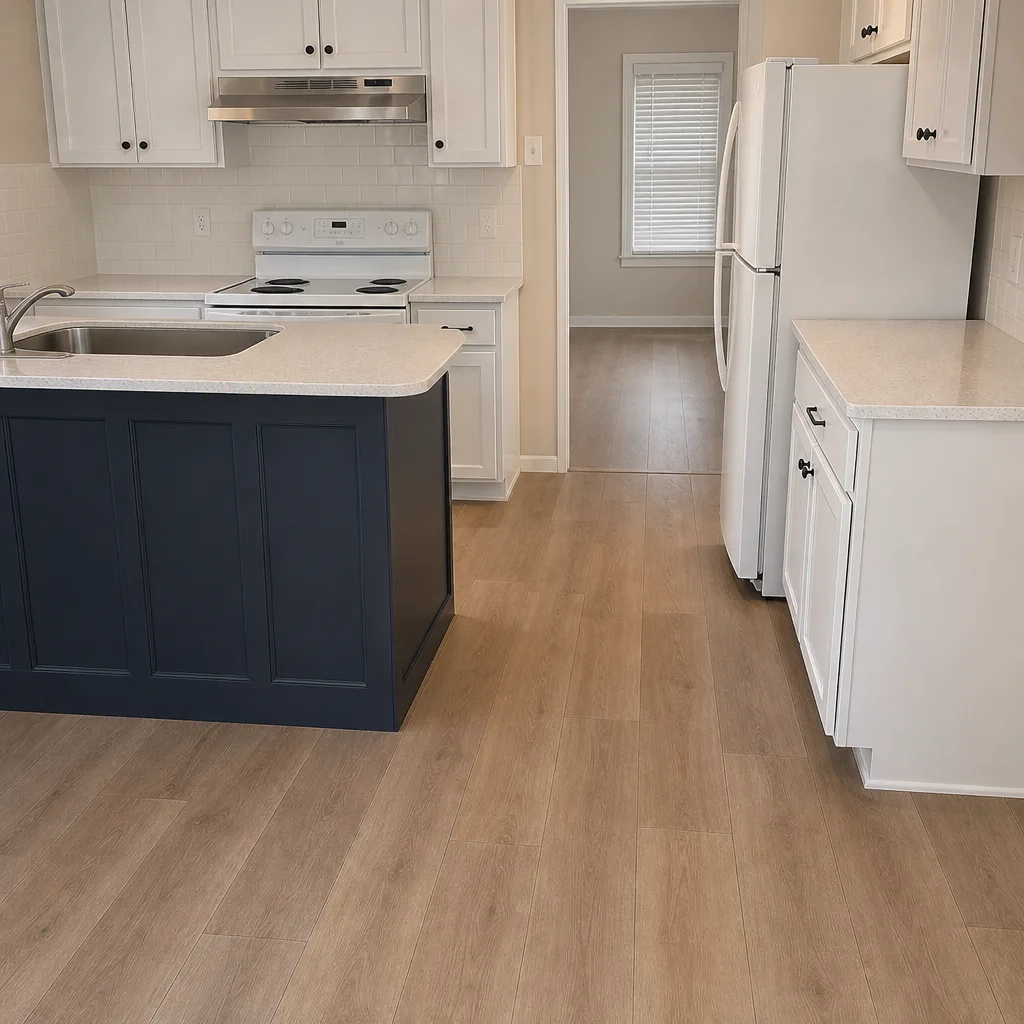
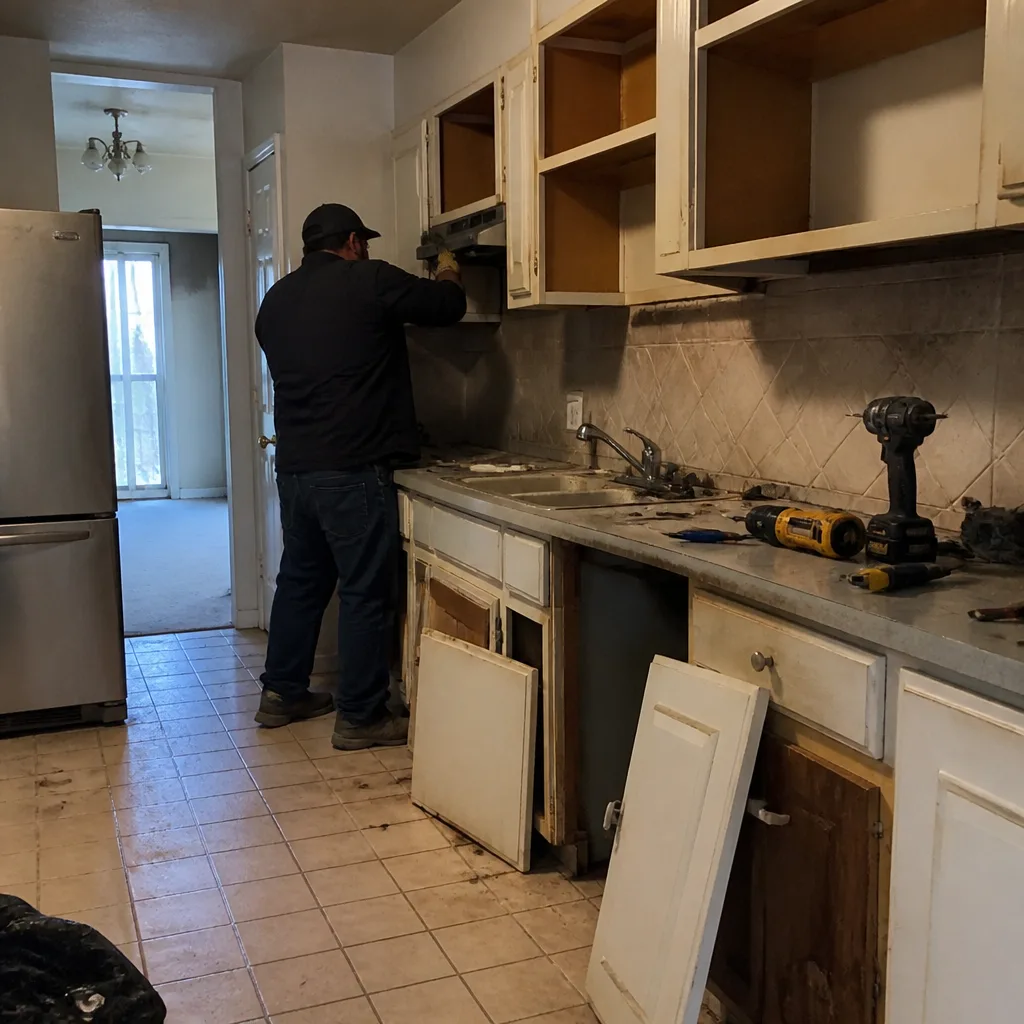
See the difference
 Before
 After
 Before
 After
 Before
 After
When to Call a Professional
Most of the annual checklist is homeowner-friendly. The tasks where we recommend calling in a professional are the ones that involve lifting pavers, resetting base material, correcting grading, or major concrete repair. If you’re seeing a paver drop of more than half an inch over a short distance, visible edge separation, water pooling near the garage after rain, or concrete cracks wider than a hairline, that’s base work rather than surface work, and it’s the point where a written assessment saves more than it costs. Construction Frisco offers free estimates in Frisco. Our technicians have up to 11 years of experience, and our estimates are written line-item quotes with fixed pricing and no change orders. We work with 50+ manufacturer brands across all seven of our trades, so the estimate can cover the whole exterior scope, not just the driveway. Call (833) 620-7367 to schedule your free estimate. We answer 24/7. Fast dispatch from 7am to 7pm, Sunday through Friday.
Frequently Asked Questions
Plan on re-sanding your paver joints once a year, in late October before the first hard freeze. Frisco’s summer heat and heavy rains wash and dry the joint sand faster than in milder climates, and a full annual refresh keeps the pavers locked together. If you pressure washed or deep cleaned during the year, do the re-sand right after that cleaning. Call (833) 620-7367 for an estimate – the estimate is free.
No. Most paver driveways in Frisco benefit from sealing every two to three years, not every year. Whether you need it depends on the paver brand, the finish, and how the surface has held up since the last coat. Some paver lines are sold pre-sealed and need less frequent refresh. A walkthrough in late September or early October is the right time to decide, and a written estimate gives you a clear answer rather than a guess.
Look for a visible gap between the outermost paver row and the curb or lawn, joints near the edge that are wider than in the center, or a paver near the curb that sits higher and tilts outward. If an edge paver rocks when you press on it, the restraint has likely lost its grip. These are the earliest signs, and they’re the cheapest to fix. Call (833) 620-7367 for an exact quote – estimates are free.
No. A puddle that sits for more than a few hours near the garage means the driveway isn’t sloping away from the house properly. That’s a grading issue, not a cosmetic one, and it should be addressed in spring before the summer storms. Left alone, water running toward the garage can work under the slab edge and make the problem worse. Call (833) 620-7367 to schedule a free estimate and get a written assessment of the slope.
Yes, with moderate pressure and a fan tip. High-pressure washing is the most common way homeowners blast joint sand out, which loosens the whole surface. Use a pH-neutral cleaner, keep the nozzle moving, and plan to re-sand the joints after any deep clean. If you don’t want to handle the re-sand yourself, call (833) 620-7367 for an estimate – estimates are free.
No. We provide written line-item quotes with fixed pricing and no change orders. The written estimate sets the final price. If we find something during the walkthrough that changes the scope, you’ll see it on the written estimate before any work begins, not on a bill afterward. Call (833) 620-7367 to schedule your free estimate.
The Bottom Line
Frisco driveways live under a specific set of conditions: expansive clay, triple-digit summers, and a mild but wet winter that keeps the soil moving. The maintenance that works here is scheduled, not reactive, and it follows the seasons. Re-sand and seal paver joints in late October before the first hard freeze. Check edge restraints and drainage every spring. Clean and fill concrete control joints and cracks annually. Fix grading before it becomes a base problem. Keep your phone out of the driveway picture until those basics are covered, and the driveway will hold its surface for far longer than one maintained reactively. If you want the full scope handled as one coordinated project, that’s what we do: Construction Frisco handles every trade involved in a full property upgrade.
Call (833) 620-7367 to schedule your free estimate. We answer 24/7. Fast dispatch from 7am to 7pm, Sunday through Friday.
Written by the team at Construction Frisco.