
Last updated November 17, 2026
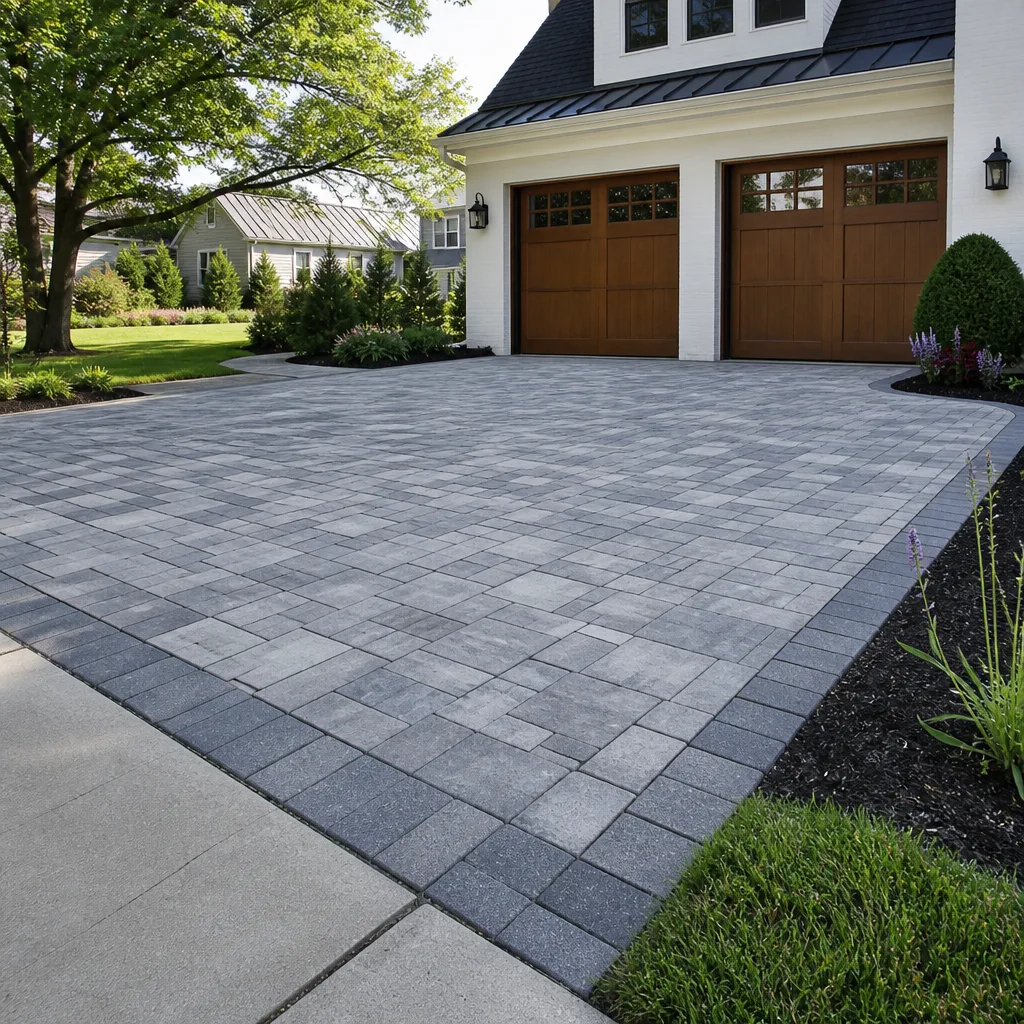 Driveway & pavers
 Kitchen remodeling
 Bathroom remodeling
 Home additions & ADU
 Roofing
 Windows & doors
 Fence
Free written scope consultation - allowances, timeline, and change-order rules on paper before a single trade is scheduled
The Complete Driveway & Pavers Guide for Frisco Homeowners
Frisco sits on some of the most expansive clay soil in the country, ground that can swell and lift a slab several inches across a single wet season, yet most driveway guides are written as if the earth under your pavers is neutral and inert. That assumption is the reason so many hardscape projects in North Texas look sharp for two summers and then start to move. The material you see is only the top layer of a system that begins a foot or more underground. This guide walks you through every real decision in a Frisco driveway project, from base depth and soil prep to edge restraint, paver choice, HOA rules, and sealer, all with North Texas heat and clay as the constant reference point.
Quick Answer
A driveway in Frisco should be built on a compacted crushed-stone base deeper than national installation specs call for, because the expansive Blackland Prairie clay beneath the surface moves with every wet and dry cycle. For most residential driveways here, ask any contractor for a base depth in the 8 to 12 inch range, mechanically compacted in lifts, with steel or aluminum edge restraints and a polymeric joint sand rated for heat. Get the base and edges right and the pavers themselves will hold their lines for years.
Styles & brands we work with
- Kitchen remodeling
- Bathroom remodeling
- Home additions & ADU
- Roofing
- Windows & doors
- Driveway & pavers
- Fence
Table of Contents
- Why Frisco’s Clay Soil Changes Everything About Base Prep
- Material Comparison: Concrete Pavers, Travertine, Brick, and Permeable Pavers
- HOA Deed Restrictions in Frisco’s Master-Planned Communities
- Edge Restraints: The Detail That Decides Whether Your Driveway Creeps
- Sealer Selection for North Texas Heat
- How a Driveway Project Actually Goes, Step by Step
- What Drives Cost in a Frisco Paver Driveway
- Common Mistakes to Avoid
Why Frisco’s Clay Soil Changes Everything About Base Prep
Frisco sits in the Blackland Prairie zone, a band of heavy, dark, expansive clay that runs through much of North Texas. This soil holds water and swells when it’s wet, then shrinks and cracks as it dries through a 100°F summer. Over a season those cycles add up to real vertical movement, and a driveway is only as stable as what sits beneath it. National paver installation specs are written for average soils across the country, and those specs assume ground far more settled than Frisco’s clay. Follow them here and you’re building on a foundation that wants to move.
The fix isn’t exotic, but it does require depth and discipline. A properly built Frisco driveway uses a deeper compacted crushed-stone base than a generic spec would call for, usually in the 8 to 12 inch range for residential driveways, laid down and compacted in lifts rather than dumped in one thick pass. Compaction in lifts is what makes the base act as a single structural layer instead of loose fill that settles unevenly under car weight.
- Excavate deep enough. The base doesn’t sit on top of the soil; it replaces excavated clay so the finished paver surface meets your garage slab and street at the right height.
- Use angular crushed stone, not round gravel. Angular stone interlocks when compacted. Round stone shifts.
- Compact in lifts of a few inches at a time. One deep pour of stone will never compact as tightly as thin layers worked one after another.
- Grade away from the house. Water should leave the driveway, not pool against the garage or the foundation.
When we spec a driveway in Frisco, base depth is the first number we ask about and the last thing we’d cut. It’s invisible in the finished product and it’s the difference between a driveway that stays flat and one that dips toward the garage within a few years. If you take only one thing from this guide, let it be this: in Frisco, the base is the project. This is also why driveway & pavers work here starts with a soil and drainage read, not a paver sample.
Material Comparison: Concrete Pavers, Travertine, Brick, and Permeable Pavers
Once the base is right, material choice comes down to how each surface handles Frisco’s specific conditions: sustained summer heat, intense UV, and that clay movement underneath. Here’s how the main options compare when rated against this climate rather than a generic national average.
- Concrete pavers. The most common choice in Frisco for good reason. Interlocking concrete pavers flex slightly with minor ground movement instead of cracking like a poured slab, and they’re easy to lift and reset if one area ever settles. They come in the widest range of colors and textures, which matters for HOA approval. Brands like Belgard, Unilock, and Techo-Bloc make pavers engineered for high heat and hard freeze cycles.
- Travertine. A natural stone that stays noticeably cooler underfoot than concrete in summer heat, which is why it turns up on pool decks and shaded entries. It’s a softer stone and can chip with heavy loads, so it’s a better fit for walkways and patios than for the main vehicle approach.
- Brick. Classic and durable, with a warm look that suits established neighborhoods. Genuine clay brick holds color well and handles heat, but the installation is slower and the cost runs higher. Ask specifically about the mortar and setting method, since a rigid mortar bed can fight the clay movement that a flexible paver base absorbs.
- Permeable pavers. Set with wider joints and open-graded base layers so water drains through the surface instead of running off. Worth serious thought on sloped lots or where a Frisco downpour pools against the garage. They need open-graded base material and periodic cleaning of the joints to keep draining, so they’re a system, not just a paver.
Whichever you pick, the paver itself is only one part of the spec. Joint sand, bedding layer, and base material all have to match the climate and the material. Choose your material, and the right base is built around it.
HOA Deed Restrictions in Frisco’s Master-Planned Communities
Many Frisco neighborhoods are master-planned communities with architectural review committees, and in places like Starwood and Newman Village the HOA has a real say in what your new driveway can look like. This is where a lot of homeowners get surprised: they fall in love with a paver color or a wide decorative apron, request approval, and find out the committee has restrictions on material color, joint width, and even driveway width. Understanding those rules before you choose materials saves weeks.
What HOAs in Frisco’s planned communities commonly review:
- Color and finish. Committees often want hardscape that reads as consistent with the neighborhood palette, so a bold contrasting color may need a sample submission.
- Driveway width and apron design. Some communities limit width or require a defined apron pattern at the street. Get the measurement requirements in writing before you lay out the job.
- Joint width and texture. Narrower joints and tighter textures may be preferred, and permeable pavers with wide joints may need a specific explanation to the committee.
- Visible materials. Anything visible from the street usually falls under review, including edging color and border patterns.
The practical move is to pull your community’s architectural guidelines and submit a material spec early, not after you’ve paid a deposit. A contractor who works in Frisco regularly will know what the local committees ask for and can put together a submission with samples and product names. Matching your pavers and any border fencing to the same approved palette, whether the project includes fence installation or just the drive, keeps your review straightforward.
Edge Restraints: The Detail That Decides Whether Your Driveway Creeps
On Frisco’s clay, the edge of a driveway is under constant pressure. Every time the soil swells, it pushes against the outermost pavers, and without a proper restraint those pavers slowly spread outward. The interlocking pattern loosens, joints widen, and the whole surface starts to wander. This is creep, and it’s one of the most common failures we see on hardscape that skipped a real edge. Steel or aluminum edge restraint, anchored into the compacted base, holds the field of pavers in compression so the pattern can’t spread. On clay, skipping it is a structural decision, not a cosmetic one.
- Excavate and compact the base to the full edge line. The restraint has to sit on solid, compacted material, not on loose soil at the border.
- Set the restraint tight to the paver field. Steel or aluminum edging is anchored with spikes into the base and butted tight against the outermost course.
- Anchor deep enough to resist heave. Shallow spikes pull out when clay swells. The restraint needs to reach into stable, compacted material.
- Backfill against the outside of the restraint. Soil or turf packed against the outer edge adds resistance so the restraint has something to push back against.
How fast creep shows depends on the site, but spread and widened joints are exactly the kind of thing we look for when inspecting a driveway that’s a few summers old. Ask any contractor to show you the edge restraint in the spec and where it’s anchored. It’s a small line item that protects the whole system. If your project also involves grading the yard, coordinating it with fence installation in the same phase keeps the edges and the fence line consistent.
Sealer Selection for North Texas Heat
Sealer in Frisco isn’t about shine, it’s about protecting joint sand, locking in color, and slowing UV fade. In sustained heat and strong summer sun, solvent-based sealers generally hold up better than water-based products because they penetrate and cure into a harder, more heat-stable film. Water-based sealers are easier to apply and lower in odor, but in this climate they tend to break down faster and can need attention sooner. Which you choose depends on the paver material and the look you want, but the heat is the deciding factor.
Reapplication intervals here look different from cooler parts of the country. Where a northern climate might stretch a sealer several years, North Texas sun and heat work on that film continuously. Expect to inspect the surface each spring and plan on reapplication at a shorter interval, with high-traffic areas like the apron and the turn into the garage wearing first. A good sealer also helps keep polymeric joint sand locked in place, which matters for keeping the joints tight against the clay movement underneath.
- Match the sealer to the paver. Natural stone and concrete pavers can want different products; a solvent-based sealer formulated for hardscape in hot climates is usually the right starting point.
- Apply to a clean, dry surface. Sealing over dust or moisture traps problems under the film.
- Watch the joints. If joint sand is washing out or the surface looks chalky, it’s time to inspect, not wait.
- Reapply on the North Texas clock, not a national average. Plan on a shorter cycle here and keep an eye on the sun-facing areas.
We spec the sealer to the material and the climate, and we tell homeowners honestly how often to expect a refresh in Frisco rather than quoting a national number that doesn’t apply.
How a Driveway Project Actually Goes, Step by Step
A paver driveway in Frisco is a sequence, and each step depends on the one before it. Here’s how a typical project runs, so you know what to expect and what to ask about at each stage.
- Site visit and soil read. We look at drainage, slope, existing surface, and how water moves across the lot. This is where base depth gets decided.
- Design and material selection. Choose pavers, border pattern, and edging within your HOA’s rules. Samples go in for architectural review if your community requires it.
- Estimate and permit check. You get a written, itemized quote with materials and scope spelled out. Most cities require a permit or right-of-way approval when a driveway meets the street, so we confirm what Frisco requires before work starts.
- Demo and excavation. The old surface comes out and the clay is excavated to full depth for the new base.
- Base build and compaction. Crushed stone goes in lifts, compacted at each stage, graded to drain away from the house.
- Edge restraint. Steel or aluminum edging is anchored into the compacted base along the full perimeter.
- Bedding layer and pavers. A thin bedding layer of sand or fine aggregate goes down, then pavers are laid to pattern and cut at edges and corners.
- Joint sand and compaction. Polymeric joint sand fills the joints and the surface is compacted to lock everything together.
- Sealing. Once clean and dry, the surface is sealed to protect color, joints, and surface.
- Walkthrough. We walk the finished driveway with you, confirm drainage, and hand over care guidance.
The steps that get skipped by rushed crews are always the invisible ones: depth of excavation, compaction in lifts, and edge anchoring. Those are exactly the steps that decide how the driveway performs in Frisco’s clay ten years out. A written estimate should spell out base depth and edge restraint explicitly so you can compare quotes fairly.
What Drives Cost in a Frisco Paver Driveway
Paver driveway cost in Frisco is set by the site and the material, not by a flat per-square-foot number. Two driveways the same size can land far apart in price because one needs deeper excavation and drainage correction while the other doesn’t. The written estimate is what sets your final price, and it should itemize the big variables so you understand where the money goes.
What moves the number most:
- Base depth and excavation. Deeper excavated clay and more compacted stone is more labor and material, but it’s not optional in Frisco’s soil.
- Drainage correction. Regrading or adding drainage to move water away from the garage and foundation adds scope.
- Material choice. Concrete pavers are the most common and cost-effective; genuine brick and natural stone like travertine run higher. Brands like Belgard, Unilock, Techo-Bloc, Cambridge Pavers, and Tremron each have product tiers.
- Square footage and layout. A straight drive is simpler than one with curves, borders, or an apron pattern.
- Edge restraint and joint sand. Steel or aluminum edging and polymeric sand are line items you want to see, not hidden.
- Sealing. Whether it’s included or separate affects the total.
Because costs vary this much by site, the useful move is a free written estimate with the base depth, edge restraint, and material named. That gives you a real number for your own Frisco lot instead of a guess from a national average. Call (833) 620-7367 to schedule yours.
Common Mistakes to Avoid
- Using a national base spec on Frisco clay. Standard specs assume settled ground. On Blackland Prairie soil, a shallow base fails within a few seasons. Ask for the deeper compacted base your soil needs.
- Skipping steel or aluminum edge restraint. Without a proper anchored edge, clay movement spreads the pavers and widens the joints, and the pattern creeps outward over a couple of summers.
- Dumping stone in one thick lift. Base that isn’t compacted in thin layers never tightens into a structural layer. It settles unevenly under car weight.
- Choosing pavers before checking HOA rules. In Frisco’s master-planned communities, a favorite color or driveway width can run into architectural review. Pull the guidelines and submit a spec early.
- Sealing with a water-based product and expecting it to last. In sustained heat, water-based sealers break down faster. Plan for a solvent-based sealer and a shorter reapplication cycle.
- Ignoring where water goes. A driveway that grades toward the garage or foundation sends every downpour the wrong way. Drainage gets planned, not discovered.
- Comparing quotes without comparing scope. The lowest number often comes from a shallower base or no edge restraint. Compare base depth, edging, and material line by line.
See the difference
 Before
 After
 Before
 After
 Before
 After
When to Call a Professional
Some driveway issues are cosmetic, and some mean the base or the edge has failed underneath. Call a professional when pavers are spreading or the joints have widened noticeably, when a section dips or ponds after rain, or when the edge itself is bulging outward. Those are signs of a base or restraint problem that no amount of surface repair will fix. Call before a re-seal turns into a rebuild, and call if your HOA requires a design submission, since the material spec needs to be right the first time. Construction Frisco offers free estimates in Frisco; call (833) 620-7367. We answer 24/7. Fast dispatch from 7am to 7pm, Sunday through Friday.
Frequently Asked Questions
For most residential driveways in Frisco, ask for a compacted crushed-stone base in the 8 to 12 inch range, compacted in lifts, because the expansive clay here demands more than national specs call for. That’s the number to put in the estimate and hold the contractor to. Call (833) 620-7367 to talk through your site; estimates are free.
Edge spread usually means the edge restraint is missing or wasn’t anchored deep enough into compacted base, so Frisco’s clay pushes the pavers outward each wet cycle. A steel or aluminum edge anchored into the base holds the field in compression and stops the creep. Call (833) 620-7367 for a free inspection and estimate.
No. The written estimate sets the price, and we itemize base depth, edge restraint, material, and sealing so there are no surprise change orders. If we discover something that genuinely changes scope, you hear it before any extra work happens. Call (833) 620-7367 for a free written estimate.
We help put together the material spec and samples your community’s architectural committee needs, which in places like Starwood and Newman Village often means color, joint width, and driveway width go under review. You should still confirm your community’s rules, but we build the submission so it’s right the first time. Call (833) 620-7367 to get started.
Most cities require a permit or right-of-way approval when a driveway meets the street, so we confirm what Frisco requires for your address before work starts. That step is part of the process, not an afterthought. Call (833) 620-7367 and we’ll walk you through it; estimates are free.
Expect a shorter reapplication cycle than in cooler climates because Frisco’s sustained heat and strong sun work on the sealer continuously, so plan to inspect each spring and reseal on a shorter interval with a solvent-based product. Call (833) 620-7367 for a free estimate on sealing or a full install.
Sometimes, but it depends on the condition and slope of the existing slab and how it meets the garage and street. On Frisco clay, a slab that has already moved is usually not a stable base for pavers, so we assess it first. Call (833) 620-7367 for a free evaluation.
How long does a paver driveway take to install?
Timeline depends on size, material, and site conditions, and we’ll give you a realistic schedule in the estimate rather than a guess. The steps that take time are the ones worth taking: excavation, base build, and compaction. Call (833) 620-7367 to schedule a free estimate and a project timeline.
The Bottom Line
In Frisco, a driveway is a soil problem before it’s a paver problem. Get the base depth right for expansive clay, compact the stone in lifts, anchor a steel or aluminum edge, choose a material and color your HOA will approve, and seal it on a North Texas schedule rather than a national one. Those choices decide whether your driveway stays flat and tight for years or starts to move. The paver is the last decision, not the first. When you’re ready to price a project, the estimate is free, and it sets the final number per job.
Whether you’re replacing a tired driveway or coordinating hardscape with a broader property upgrade, one contractor across every trade keeps the work accountable from foundation to finish line. From a new drive to a larger addition, the same team handles the whole scope, including home additions & ADU planning, and you can explore the full range of work at Construction Frisco.
Call (833) 620-7367 for a free estimate. We answer 24/7. Fast dispatch from 7am to 7pm, Sunday through Friday.
Written by the team at Construction Frisco.