
Last updated November 17, 2026
 Home additions & ADU
 Kitchen remodeling
 Bathroom remodeling
 Roofing
 Windows & doors
 Driveway & pavers
 Fence
Free written scope consultation - allowances, timeline, and change-order rules on paper before a single trade is scheduled
Construction Emergency Preparedness Guide for Frisco Homes
Most homeowners treat construction emergencies as a contractor problem. It’s not. The first four hours after hail punches through a shingle field, after heavy rain tops a foundation drain, or after a supply line lets go in a cold snap decide whether you’re looking at a straightforward repair or a full-scale restoration. What you do before anyone arrives is the entire decision. This guide lays out the sequence, the documentation protocol, the temporary work you can safely do yourself, and the supplies worth staging now so that a bad afternoon in Frisco doesn’t become a bad year.
Quick Answer
In Frisco, the three construction emergencies that actually show up are hail damage to roofs, foundation flooding after extreme rain, and pipe failure during a freeze. In each case, the homeowner’s first move is the same: stop the water or the intrusion if you safely can, photograph everything in a fixed sequence before moving anything, and then call. Temporary mitigation that keeps the damage from spreading is your job in the first hours. Structural repair, electrical work, gas lines, and permanent roof or plumbing repair are not. Our technicians have up to 11 years of experience, and the pattern we see repeats: documented, contained damage is a manageable claim, and undocumented, spreading damage is a rebuild.
Styles & brands we work with
- Kitchen remodeling
- Bathroom remodeling
- Home additions & ADU
- Roofing
- Windows & doors
- Driveway & pavers
- Fence
Table of Contents
- The Three Construction Emergencies Frisco Homes Actually Face
- Roof Breach After Hail: The Four-Hour Sequence
- Foundation Flooding After Extreme Rain
- Pipe Failure During a Freeze Event
- What You Can Safely Do Yourself vs. What Must Wait for a Licensed Contractor
- The First 60 Minutes: Documentation Protocol That Protects Your Claim
- Emergency Contractor Vetting Under Pressure
- The Storm Season Kit Every Frisco Home Should Have Staged
The Three Construction Emergencies Frisco Homes Actually Face
Frisco sits in a stretch of North Texas where the weather has a way of arriving all at once. The spring hail corridor that runs through Collin County doesn’t discriminate by neighborhood, and a hailstorm that drops golf-ball stones over Stonebriar can leave Starwood untouched and vice versa. That matters for preparation: you’re not preparing for a hurricane you can see coming for five days. You’re preparing for a cell that forms in the afternoon.
The three emergencies worth building a plan around are:
- Roof breach after hail. Granules strip, shingles crack, and impact points open paths for the next rain. A breach isn’t always visible from the ground, which is why water staining on a ceiling is the call to action.
- Foundation flooding after extreme rain. North Texas clay soil absorbs water slowly and swells, and during a sustained rain event the water has to go somewhere. When the grade, gutters, or a blocked swale push water toward the slab rather than away, you get ponding against the foundation and intrusion at the lowest points.
- Pipe failure during a freeze. The freeze events that reach Frisco don’t last long, but they don’t have to. Exposed lines in an attic, a garage wall, or an unheated crawl space are the usual suspects, and water damage from a burst line can exceed what the freeze itself would suggest.
Each emergency has a different action sequence, but all three share a common first step: write down the time you noticed the problem. Insurance adjusters ask, and a precise timeline is worth more than a vague estimate. Keep a notebook with the storm kit and start the clock the moment you see water or damage.
Roof Breach After Hail: The Four-Hour Sequence
A roof breach is the emergency where the homeowner’s first hours matter most, because water intrusion runs downhill and inward fast. Here’s the sequence:
- Confirm it’s actually a breach. From inside, check the attic or upper ceiling for active drips, wet insulation, and dark stains. Photograph any water staining before you do anything else.
- Move valuables out of the drip zone. Furniture, electronics, artwork, and paper records come out from under the affected area first. Put down towels or a bucket to catch what’s coming in.
- Do not walk the roof. A hail-damaged shingle field can be slick and structurally compromised, and a fall from a single-story roof is a serious injury. This is the single most important line in this guide.
- Apply a temporary tarp only if you can do it safely from a ladder below the eave or by reaching a low-impact area. If reaching the damaged area requires getting onto the roof, stop and call. A tarp applied incorrectly – or a tarp that voids a manufacturer’s warranty because of how it was fastened – is worse than waiting for a professional. Insurers generally expect temporary mitigation to be reasonable and documented, so photograph the tarp before and after and record the date and time.
- Call for a roof assessment. A licensed roofing contractor can inspect safely, document the damage for your claim, and install proper temporary protection.
One note specific to Frisco: hail events here are widespread, which means roofing contractors are in heavy demand right after. The homeowner who has already photographed ceiling staining, documented the tarp, and called the same day is in a better position than one who waits for a neighbor’s recommendation. Our technicians have up to 11 years of experience with hail-damaged roofs in this climate, and the difference between a well-documented breach and an undocumented one shows up at claim time.
Foundation Flooding After Extreme Rain
Foundation flooding in Frisco is rarely a dramatic event. It starts with water finding the path of least resistance and pooling where it shouldn’t – against the slab, at a low corner, or at a garage door threshold. The damage accumulates: saturated soil that swells against the foundation, water wicking into the bottom plate of a wall, and the slow onset of interior moisture.
The action sequence after extreme rain:
- Check the perimeter. Walk the outside of the house and see where water is standing or running. Note the direction of flow.
- Clear the drainage paths you can reach. Downspout extensions, gutter outlets, and any surface drains should be clear so water moves away from the foundation rather than toward it. If a gutter is full of debris and overflowing against the wall, clear it.
- Get water out of the interior. If water has entered, remove it as quickly as you can with a wet/dry vacuum or towels, and get air moving with fans. Wet drywall and insulation hold moisture, so pull back anything that’s soaked and can be removed without cutting into the structure.
- Photograph the standing water, the waterline on walls, and the wet materials before you move them. This is the evidence an adjuster needs.
- Call for an assessment of drainage, grading, and any structural concern. A licensed contractor can evaluate whether the water is a grade problem, a drainage problem, or a foundation concern, and specify the right fix. Hardscape and drainage corrections often fall under a driveway & pavers scope, since the slope and surface of your drive and walkways are part of how water moves across the lot.
Clay soil behaves differently from sandy soil, and in Frisco that means water hangs around. Keep the storm kit’s shop vac and a couple of box fans where you can reach them quickly, because the first hour of interior drying is what keeps a wet floor from turning into a mold problem.
Pipe Failure During a Freeze Event
A burst pipe during a freeze puts water into a wall or ceiling at full line pressure. The single fastest, most effective action is shutting off the water supply. Everything else comes second.
- Locate the main shutoff before you need it. Every adult in the household should know where the main water shutoff valve is. In most Frisco homes it’s at the meter or where the service line enters the house. If you don’t know, find it now.
- Turn it off the moment you see or hear a leak. A quarter turn on a ball valve or a firm clockwise turn on a gate valve. Open a low faucet afterward to drain the remaining pressure out of the lines.
- Shut off the electricity to any area with water in it at the panel, if you can do so safely from a dry position. If the panel is in a wet location or you’re unsure, do not touch it. Call an electrician.
- Contain and remove water. Buckets, towels, wet/dry vacuum. Move furniture and valuables out of the wet zone.
- Document the leak point, the water line, and the wet materials. Photograph the burst pipe, the water staining, and the affected flooring and wall surfaces.
- Call a licensed plumber for the repair. A freeze-damaged line may have split in more than one place, and a professional needs to inspect the run, not just the visible leak.
Freeze events are the exception to the rule that preparation is mostly about roofing and drainage. Exposed lines in attics and unheated spaces are the common failure points, and a homeowner who has already protected those lines before the cold arrives avoids the call entirely. If a freeze is forecast, let a couple of faucets drip, open cabinet doors under sinks on exterior walls, and make sure you know where the shutoff is.
What You Can Safely Do Yourself vs. What Must Wait for a Licensed Contractor
We’re often asked where the line is between temporary mitigation and work you shouldn’t touch. The line is straightforward: temporary mitigation keeps damage from spreading, and permanent repair restores the structure. One is homeowner work. The other is licensed work.
Safe for a homeowner in the first hours:
- Placing buckets and towels, moving furniture, and extracting standing water with a wet/dry vacuum.
- Shutting off the main water supply.
- Clearing gutters, downspouts, and surface drains at ground level.
- Photographing all damage before moving anything.
- Applying a temporary tarp to a damaged roof only if it can be reached safely from a ladder and the fastening won’t create further damage.
- Turning off electricity to a wet area at the panel from a dry position.
Must wait for a licensed contractor:
- Any work on the roof itself, including walking the surface, replacing shingles, or working near the ridge or valleys.
- Electrical work of any kind, including repairs to a panel, wiring, or fixtures affected by water.
- Gas line work – always call a licensed professional.
- Structural repair, including foundation work, framing, and anything that affects load paths.
- Permanent plumbing repairs to a freeze-damaged line.
- Removal of building materials where moisture may have penetrated the wall cavity or ceiling assembly.
If you’re unsure which side of the line a task falls on, treat it as contractor work. The cost of a call is nothing compared to a serious injury, a voided warranty, or a claim denied because the homeowner’s intervention changed the damage.
The First 60 Minutes: Documentation Protocol That Protects Your Claim
Photographs taken in the right order are the difference between a smooth claim and a dispute over pre-existing damage. The adjuster can’t see the storm; they can only see what you show them. Here’s the sequence to follow:
- Wide exterior shots first. Stand back from the house and photograph the whole elevation that shows the damage. Get the condition of the roof, gutters, and yard in a single frame so the adjuster can see the context.
- Mid-range shots of the affected area. Close enough to identify the damage but wide enough that the location in the house is obvious.
- Detail shots of each damage point. A close-up of the shingle damage, the ceiling stain, the burst pipe, or the water line on the wall. Include a coin or ruler for scale where it helps.
- Interior shots before cleanup. Photograph the drip zone, the wet floor, and any staining before you move a bucket or towel. Then photograph again after cleanup so the adjuster can see the before and after.
- Record the time, the weather event, and what you did. A short written log with the date and time of every action is worth a lot.
- Do not throw anything away until the claim is settled. Damaged materials, packaging, and documentation stay until you have a resolution.
Two specific Frisco notes. First, pre-existing damage is a common source of disputes, so if a section of ceiling had a faint stain before the storm, photograph it now and note the date. Second, don’t clean the roof of debris before the adjuster or a contractor sees it; hailstones and shingle damage look different before and after cleanup.
Emergency Contractor Vetting Under Pressure
After a storm in Frisco, contractors will knock. Most are legitimate. Some aren’t. The pressure to accept help quickly is exactly what a bad actor counts on, so have two questions ready before anyone steps onto your property.
Question one: “Are you licensed, insured, and will you put a written, itemized estimate in writing before any work starts?” A legitimate contractor will answer yes to all of that and provide documentation. An unlicensed contractor operating under a storm-chasing banner will change the subject, offer to start today, or ask for a deposit before providing a written scope. A written, itemized estimate is your protection: it defines what’s included, what it costs, and what triggers any change order. Never agree to work that isn’t described in a written estimate.
Question two: “Will you pull the permits the work requires?” In most North Texas municipalities, structural and roofing work requires a permit, and the permit process protects the homeowner by putting an inspector’s eyes on the finished work. A contractor who suggests you skip the permit is telling you something about how they operate.
Two more rules worth holding to under pressure:
- Don’t sign anything on the spot. A legitimate contractor will leave the estimate and let you think about it. High-pressure signing after a storm is a warning sign.
- Don’t pay a large deposit before work begins. A standard, modest deposit for materials is reasonable; a request for most of the job up front is not.
If you already have a contractor you trust, call them first. A team that has worked on your property before knows the roof, the grading, and the details that a stranger won’t. Construction Frisco works across seven distinct trades – roofing, windows and doors, kitchen and bathroom remodeling, home additions & ADU, fence installation, and driveway and pavers – so a single call can handle most of what a storm throws at a home, under one contract.
The Storm Season Kit Every Frisco Home Should Have Staged
Frisco storm season runs roughly from spring into early summer for hail and from late fall into winter for freeze events. Having supplies staged before the first serious system rolls through means you’re not searching for a tarp while water is running down a wall.
What to stage in a single storage bin
- Tarps. A 10×12 and a 20×30 heavy-duty tarp cover most single-family roof sections. Store them folded, dry, and clearly labeled.
- Bungee cords and rope. Enough to secure a tarp to a ladder or eave without over-tightening.
- A wet/dry vacuum. A 5-gallon or larger unit that can handle a couple of inches of water.
- Box fans and a dehumidifier. For drying an interior after water intrusion.
- Towels, buckets, and heavy-duty trash bags. For containment.
- A waterproof document pouch. Copies of your insurance policy, contractor information, and a notebook with a pen for the timeline log.
- A phone charger and a backup battery. Because the power may be out when you need to call.
- Flashlights and batteries. Two, because one always runs low.
The information to have written down
- The main water shutoff location. Mark it on a simple floor plan and tape that plan to the inside of your electrical panel door.
- The gas shutoff location if your home uses natural gas. Know it, but don’t operate it yourself unless you’re instructed to by a utility or a professional.
- The electrical panel location and which breaker controls which area of the home. Label them before you need to.
- Your insurance policy number and the adjuster line. Not the phone tree, the actual number to call.
- A trusted contractor’s information. Write down the name and phone number of a contractor you’ve used before, so you’re not choosing under pressure.
Store the bin in the garage or a closet that stays dry, and check it once before each storm season. Replace any tarp that has cracked or mildewed, and make sure the vacuum still runs. A kit that gets tested once a year is a kit that works.
Common Mistakes to Avoid
- Walking the roof to inspect hail damage. Hail-damaged shingles are slick and structurally compromised, and a fall is a serious injury. Photograph from a ladder below the eave or let a professional inspect the surface.
- Applying a tarp without documenting it. An insurer may deny coverage for damage that happens after mitigation if the homeowner can’t show what was done and when. Photograph the tarp, note the time, and save the receipts.
- Cleaning up before photographing. Once a bucket of standing water is emptied or a wet towel is moved, the adjuster can’t see the waterline. Photograph everything first, then clean.
- Signing an emergency contract on the spot. A storm chaser’s close is a warning sign. Ask for a written, itemized estimate and take time to read it.
- Skipping the permit. In many Frisco and Collin County projects, structural and roofing work requires a permit, and an unpermitted job can complicate a future sale or claim. Ask your city’s building department what your project requires.
- Leaving the main shutoff unmarked. Every adult in the house should know where it is. A freeze event with an unknown shutoff location means water keeps running.
- Not knowing the difference between temporary and permanent repair. A homeowner can stop water and contain damage; permanent repair of roofing, electrical, gas, or structural work needs a licensed contractor.
See the difference
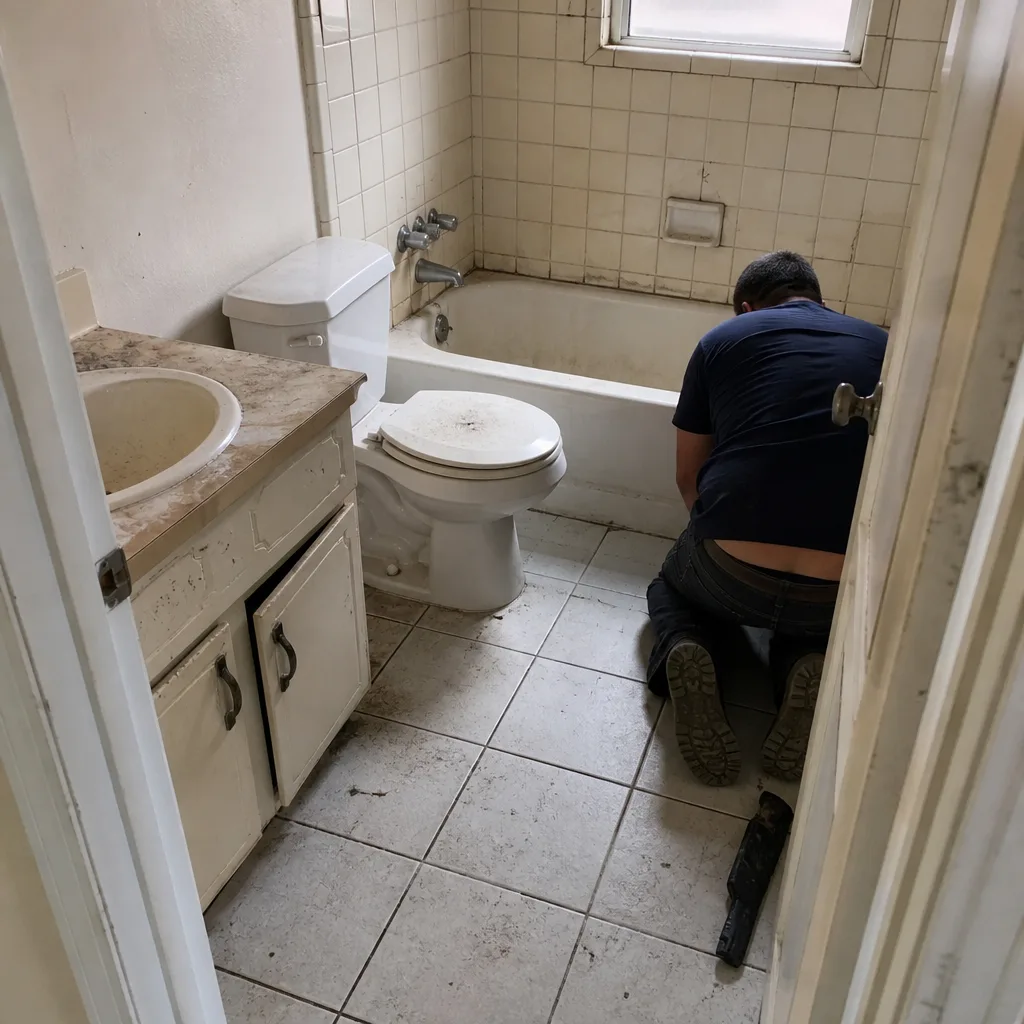 Before
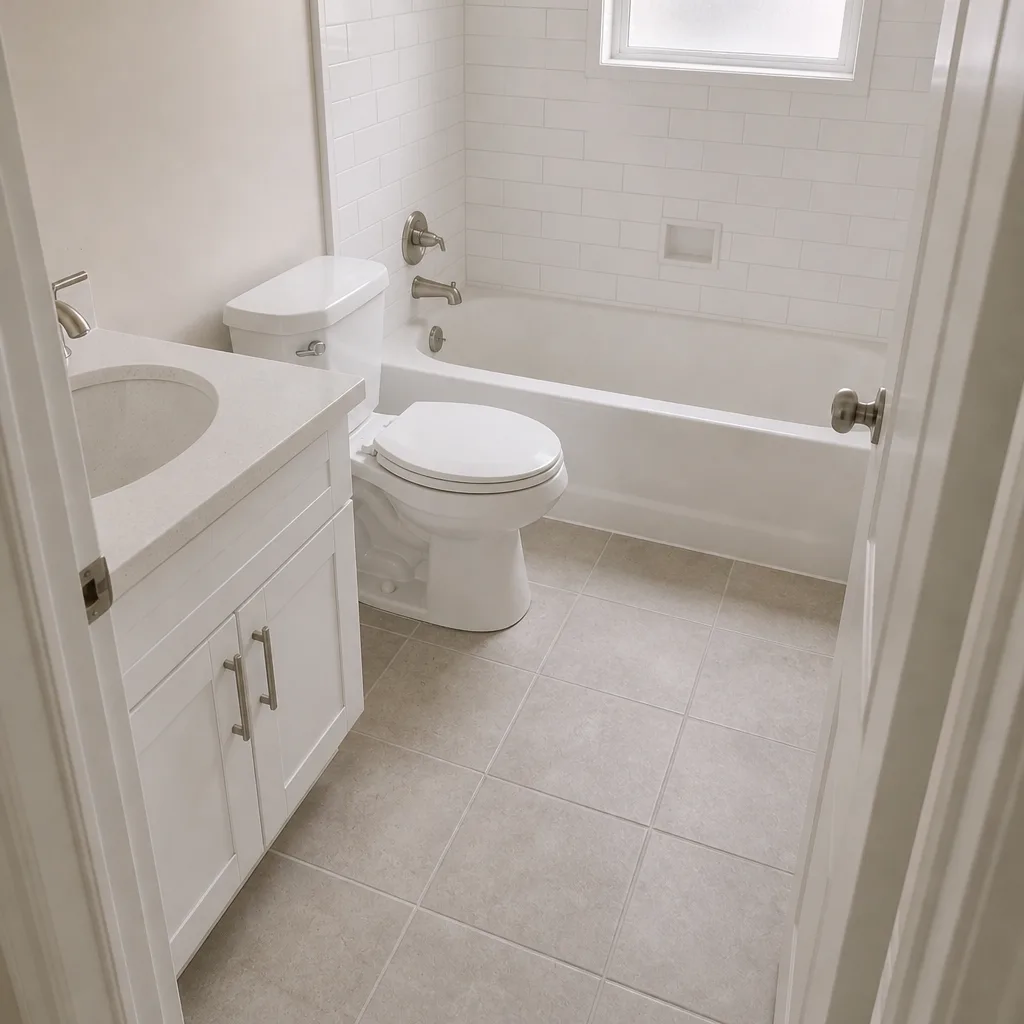 After
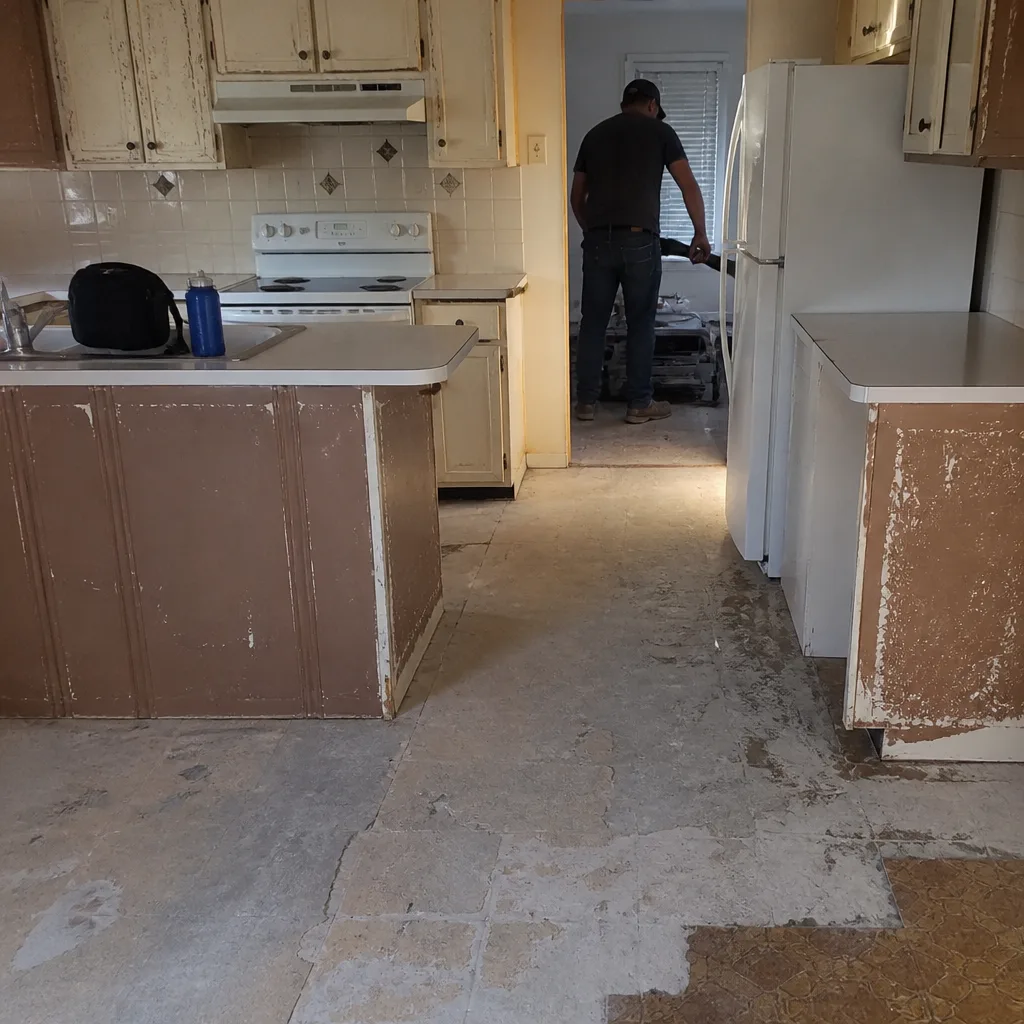 Before
 After
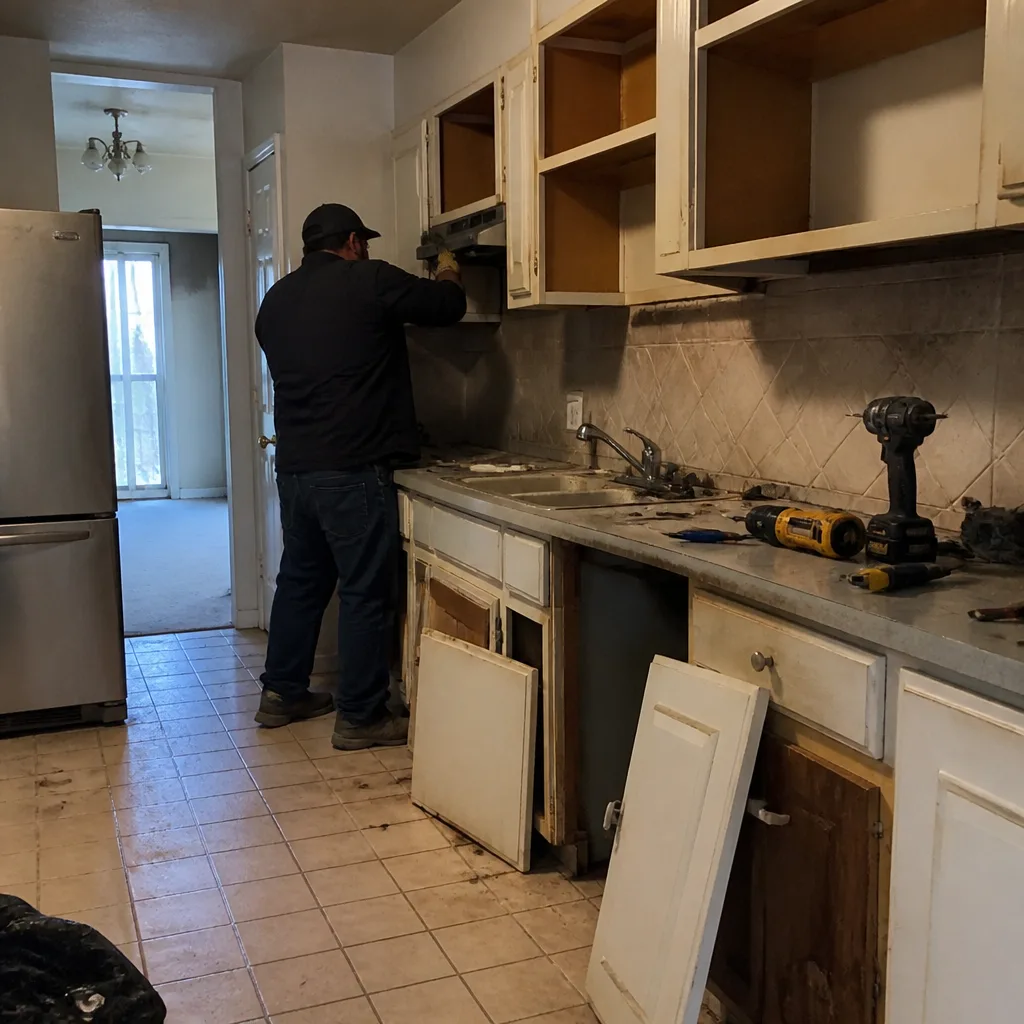 Before
 After
When to Call a Professional
Call a professional the moment damage moves beyond containment. If water is entering the house and you can’t stop it, if a roof breach is larger than a few square feet, if a pipe has burst and the shutoff isn’t cutting the flow, if the electrical panel is in a wet area, or if any gas line is involved, that’s a call, not a project. Also call when you’re unsure: an assessment from a licensed contractor is cheaper than a repair. Construction Frisco offers free estimates in Frisco – call (833) 620-7367. We answer 24/7, and fast dispatch runs from 7am to 7pm, Sunday through Friday. Our technicians have up to 11 years of experience with hail, water, and freeze damage in this part of North Texas.
Frequently Asked Questions
Photograph the damage from the ground and from a ladder below the eave, check the attic and ceilings for active leaks, move valuables out of the drip zone, and apply a temporary tarp only if it can be reached safely. Then call a licensed roofing contractor for an inspection. Don’t walk the roof yourself. Call (833) 620-7367 for a free estimate; we answer 24/7 with fast dispatch from 7am to 7pm, Sunday through Friday.
Coverage depends on your policy, but most insurers expect reasonable temporary mitigation after a covered event, and documentation helps your claim. Photograph the damage before tarping, photograph the tarp afterward, and write down the date and time. If you’re uncertain about your policy, call your insurer before doing the work. Then call (833) 620-7367 for a professional assessment, free of charge.
Water that pools against the slab and stays for more than a few hours after rain is a real concern, especially in Frisco’s clay soil, which drains slowly. Also look for water entering the garage, staining at the base of interior walls, and doors that stick after a rain event. A contractor can evaluate grading, gutters, and drainage to find the cause. Call (833) 620-7367 to schedule a free estimate.
Turning off the main is the right move only once a leak has started or you’re leaving the house empty for an extended period during a freeze. Before a freeze, protect exposed lines in the attic and unheated spaces, let a faucet drip, and open cabinet doors under sinks on exterior walls. If a pipe bursts, shut off the main and call a licensed plumber. For a free estimate on freeze-related repair, call (833) 620-7367.
Ask whether they’re licensed and insured and will provide a written, itemized estimate before any work starts, and ask whether they’ll pull the permits the work requires. A legitimate contractor answers yes to both and leaves the estimate with you. If the answer is vague or the contractor pushes for a signature on the spot, don’t use them. For a straightforward written estimate from a licensed team, call (833) 620-7367.
Tarps, bungee cords and rope, a wet/dry vacuum, box fans, towels and buckets, a waterproof pouch with your insurance information, flashlights and batteries, and a written log of your main water shutoff, gas shutoff, and electrical panel locations. Store it all in a dry bin and check it once a season. If storm damage hits, call (833) 620-7367 for a free estimate; we answer 24/7 with fast dispatch from 7am to 7pm, Sunday through Friday.
The Bottom Line
Frisco’s construction emergencies are hail, foundation flooding, and freeze events, and the homeowner’s first hours set the outcome. Contain what you can safely contain, photograph everything before you touch it, shut off the water when it’s running, and call a licensed professional for anything structural, electrical, gas, or permanent. Stage the storm kit before the season, know where your shutoffs are, and have a contractor’s number ready before you need it. A prepared home recovers faster and documents better, and a documented claim is a claim that gets paid. From foundation to finish line, one contractor handling every trade keeps the process simple when it matters most.
When damage hits, call Construction Frisco at (833) 620-7367 for a free estimate. We answer 24/7 with fast dispatch from 7am to 7pm, Sunday through Friday, and our team handles roofing, windows and doors, remodeling, additions, fencing, and hardscape under one contract, so you have one point of accountability from assessment through final repair. Learn more about Construction Frisco and the trades we cover under one roof.
Written by the team at Construction Frisco.